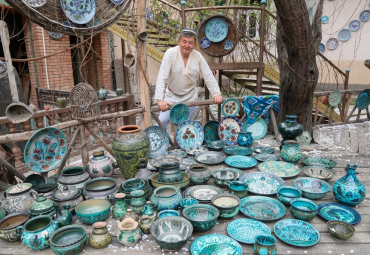
For many centuries, pottery has remained one of the leading traditional crafts of Central Asia. Ceramic products were made with both glazed and unglazed surfaces, and each famous pottery center developed its own artistic style. The differences could be seen in the shapes of the products, the character of the ornaments, the decoration techniques, and the color schemes used.
...
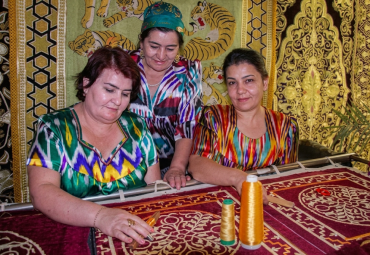
Gold embroidery holds a special place in Bukhara’s traditional decorative and applied arts. For centuries, craftsmen have used metallic threads to create intricate patterns on clothing and household items, turning everyday objects into true works of art.
...
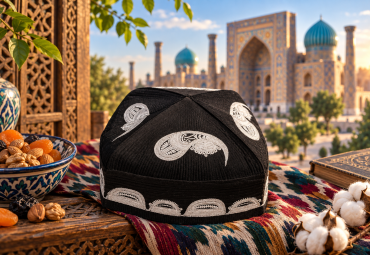
It is difficult to imagine Uzbek culture without the skullcap — doppi. Today, this small traditional headwear item is one of the most recognizable symbols of Uzbekistan. It is worn by men and women, adults and children, as part of traditional dress and festive attire.
...
Bukhara – a city of historical monuments, culture, and spiritual heritage.
Bukhara is one of the oldest and most historical cities of Uzbekistan, with a history spanning over 2,500 years. Since ancient times, it has been a key political, economic, and religious center in Central Asia. Recognized as one of the most important centers of Islamic science and education, Bukhara has produced many scholars and thinkers, such as Imam Bukhari, Bahouddin Naqshband, and Avicenna (Ibn Sina).
At the heart of the city stands the Ark Fortress, the ancient residence of Bukhara’s rulers, which still stands today. The Kalon Minaret, built in the 12th century, is notable for its grandeur and unique architectural style and was once the tallest structure from which the call to prayer (adhan) was announced.
The Mir-i-Arab Madrasa is an Islamic educational institution where thousands of students have studied over the centuries. Today, it remains active and attracts visitors from around the world.
Bukhara was a major hub on the Silk Road, and today tourists can explore ancient markets such as Toqi Zargaron, Toqi Telpakfurushon, and Toqi Sarrafon, where traditional handicrafts, carpets, jewelry, and national clothing are still sold.
...
 Русский
 Français